DEATH OF A SALESMAN → Festival Theatre
Sunday 27th September, Festival Theatre
FIVE STARS
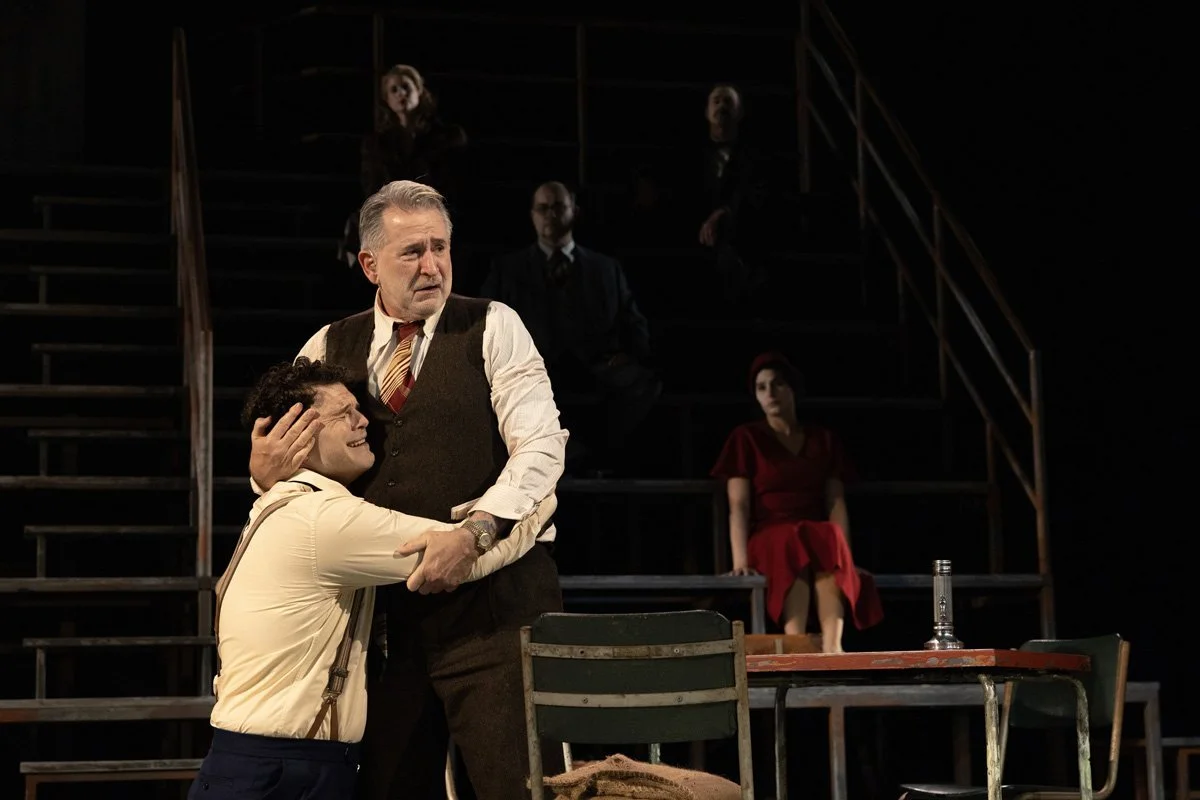
It was a sudden turn of events and the hard work of all the teams involved that brought Arthur Miller’s Death of a Salesman to the Festival Theatre following a national tour. It's an extra special final stop and a much welcome homecoming for GWB Entertainment, Anthony Lapaglia, Director director Neil Armfield and Adelaide cast members; Luca Sardelis, Mark Saturno and James Smith.
I don’t think I have ever seen the Festival Theatre this full for a play— patrons spilled into the stalls, grand and dress circles for this Tony-Award-winning canon piece of theatre. There is a clear reason why Death of a Salesman continues to remain strikingly relevant: it still exposes the contradictions of “The American Dream,” of what it takes to succeed, of ambition, of the complex relationships between families. Armfield’s revival for Australian audiences is devastatingly human and proves that this old tragedy still knows exactly where to land its punches.
The American Dream that anyone can achieve financial success and material comfort lies at the heart of Death of a Salesman. Willy Lowman is so disillusioned by its premise that he becomes a victim of his own ambitions. From the outset, the audience battles with how much empathy we give to Willy. Lapaglia enters exasperated from his day at work, yet still believes he is on the verge of success. At this point, we have all been Willy: trying to make ends meet, close to a big break, or just wanting the best for our family. Lapaglia strongly portrays Willy’s delusional desires, so much so that as the play goes on, we start to disagree with Willy’s self-destructive drive. Aside from moments of unclear diction or Brooklyn accent from Lapaglia, his performance strengthens as the play goes on and we start to see the complex intricacies of his character.
Alison Whyte as Linda Lowman delivers a masterful performance. She gives a heart-wrenching, highly emotional interpretation of the fiercely loyal Linda. Her complex devotion to Willy despite the family turmoil was saddening for the audience to witness, Whyte knowing how to switch from motherly tenderness to visceral anguish.
There is a line that powerfully becomes full circle in the play. In Act I Willy jokes that you “work a lifetime to pay off a house. You finally own it, and there's nobody to live in it.” We chuckle at this because hey, this is the reality of our “Australian Dream” right now! We are reminded of Willy’s dialogue again when Whyte, hovering above Willy’s grave in the final scene, declares “we’re free.” Their house has been paid off, but the whole family has ironically become victims of false promise. Armfield knows how to leave us with this bitter ending and poignantly remind us that our current society are similar victims of greed and wealth consumption.
Josh Helman as Biff Loman is another standout performer who captures the complex character arc of the eldest son that battles against his desires of being a free spirit and his family duty. He shares a cheeky, brotherly dynamic with Happy, performed by Ben O’toole, whereby it becomes clear how much they are foils of each other. They capture the universal disparity between the expectations placed on the older sibling versus the younger, as Happy continues to harness Willy’s belief to make a lot of money, even at the show’s conclusion.
Helman however, displays what happens when that family pressure finally bursts, that life-altering moment when you learn that the person you looked up to is no longer the hero you thought. After Biff’s heightened monologue in act II, you could hear a pin drop in the theatre after he breaks down in front of his father– these are the deeply human moments in a theatre that you never forget.
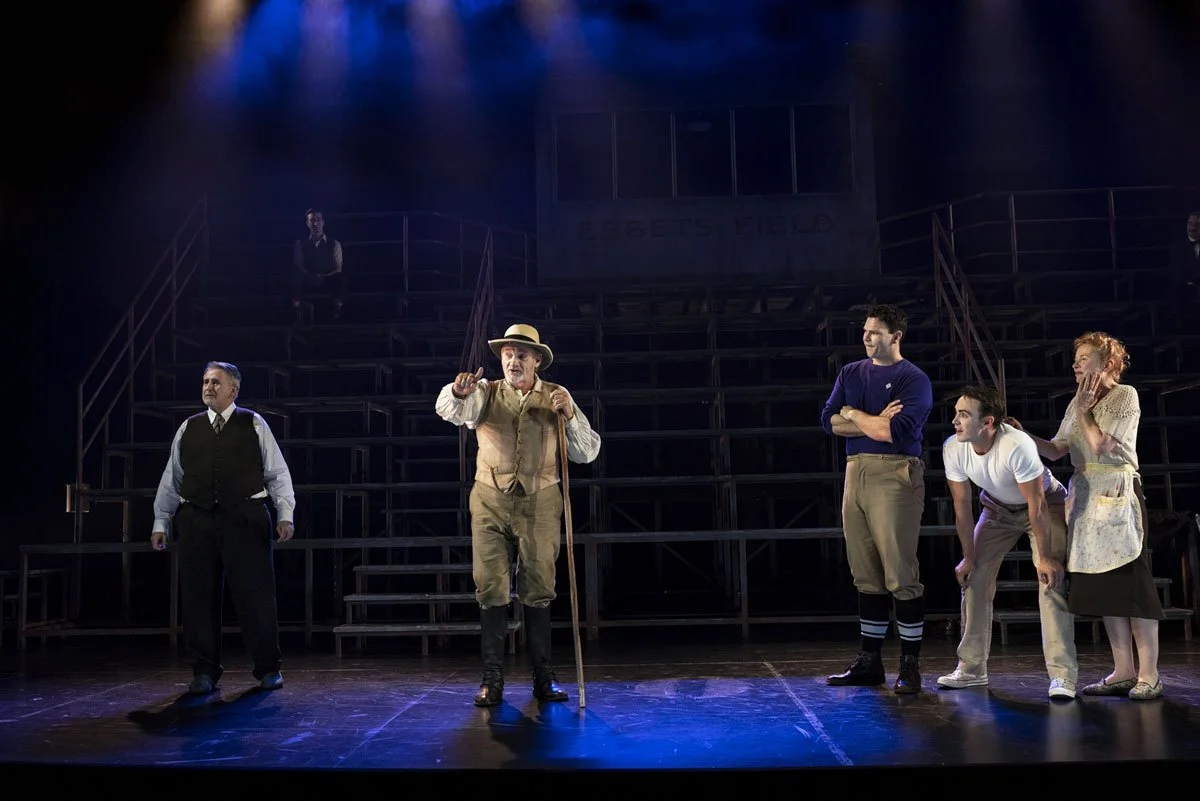
Even for a show of this length, the pacing leaves the audience with little opportunities for our minds to wander. Armfield deliberately and constantly plays with our attention and tracking of the plot, particularly in how he stages the memories and flashbacks. Often signalled by a blue lighting change, Pajanti’s lighting design also places us in moments of confusion and disillusionment, synonymous with Willy’s mental decline. Anthony Phelan as Willy’s brother Ben is the key character who arises in these moments, but we too question what belongs in Willy’s memory and what was fiction. Phelan’s performance is hypnotising and haunting: a ghost motif of what could have been…
Adelaide cast members Luca Sardelis, Mark Saturno and James Smith prove that our homegrown talent belongs in shows with such a legacy. Armfield’s directional choice to have the actors all sit on the bleachers and watch the scenes contributes to this show’s unnerving atmosphere. I found my eyes wandering to theirs, watching them watching the action on stage, like us, they are there, but not entirely.
It's rare that such a canon piece of theatre gets its own Australian revival, let alone makes its way to Adelaide. You might need a few business days to process everything it throws at you, but Armfield’s revival of Death of a Salesman is an unforgettable triumph of Australian theatre.
~ By Sophie Tsoulos
Show Run: till 5th October
Tickets: https://salesmanaustralia.com.au
Theatre: Adelaide Festival Theatre
Photography: Jeff Busby